Community Development
Community-Led • Data-Driven • Systems-Connected
Community-Led • Data-Driven • Systems-Connected
Focus on low-income communities
CDCs primarily serve areas with significant low-income populations, working to address issues like disinvestment and lack of access to essential services.
Community-driven approach
CDCs are often initiated and led by local residents, business owners, and community leaders who aim to address their neighborhood’s specific needs.
CDC Activities
CDC activities include developing affordable housing, facilitating economic development through small business support, providing job training programs, and advocating for community improvements
Non-profit status
CDCs are considered non-profit entities, meaning they are not primarily focused on generating profit but rather on achieving social impact.
Check back soon to see what we are working on!
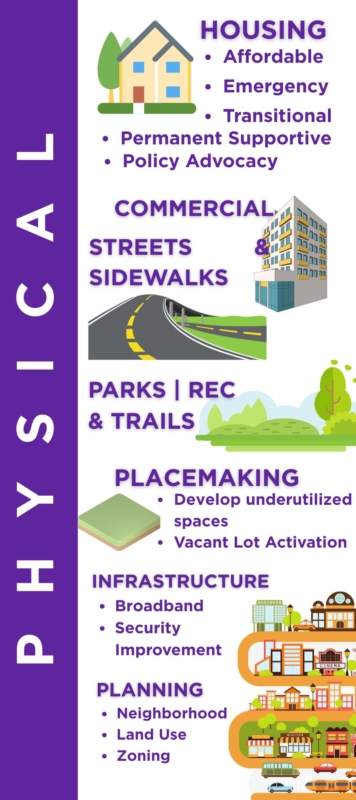
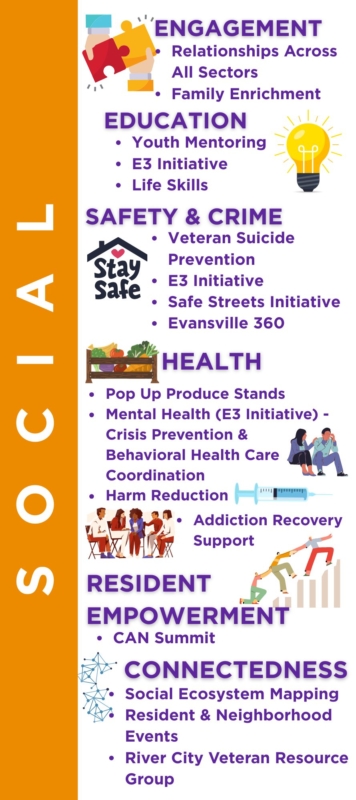
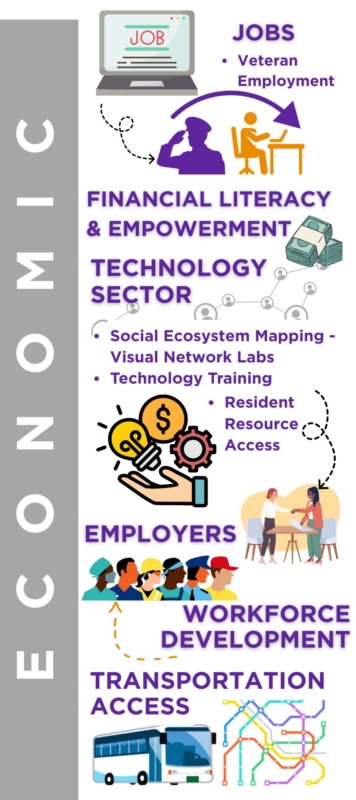

The Collective Action Network (CAN) is a cross-sector group of community leaders who come together to create change. Using the collective impact model, this approach unites multiple organizations to tackle systemic challenges through shared goals, data-driven strategies, and coordinated efforts. Together, we strive to enhance community outcomes and build a stronger support system for vulnerable populations.
Expanding our focus through CAN allows us to serve all neighborhoods in need, rather than being limited to specific areas defined years ago. Our initiatives now span three key areas: Physical, Social, and Economic Development, where we serve as the backbone organization for collective efforts.
As a member of the University of Evansville’s Evansville Promise Neighborhood (EPN) core team, we are invested in all out comes, but as a community development organization, we are particularly interested in Pipeline Block 4 – Improving Neighborhood & Community. The four solutions in this pipeline include
ECHO leads initiatives in all of these areas and employs a Housing Policy Director to advocate for policies that result in greater family and neighborhood stability.